
Opel Ascona 400 and Manta 400
Opel won the 1982 world title with the Ascona 400 and then built the Manta 400 for Group B. It was a classic rally car — front engine, rear-wheel drive, beautifully balanced — but it had no answer to four-wheel drive.
Opel Manta 400 — indicative
Episode 7 — The Underdogs: Toyota, Opel, Nissan, Mazda, Renault, Citroën, Porsche & Ferrari
The last great rear-wheel-drive rally cars.
The Ascona 400 and the 1982 title
The Ascona 400 was still a Group 4 car, but was allowed to compete in the transition year of 1982. Walter Röhrl and Christian Geistdörfer won Monte Carlo and the Ivory Coast with it and collected so many podiums that they became world champions despite only two wins. In 1983 Ari Vatanen won the Safari in an Ascona 400. See 1982 season.
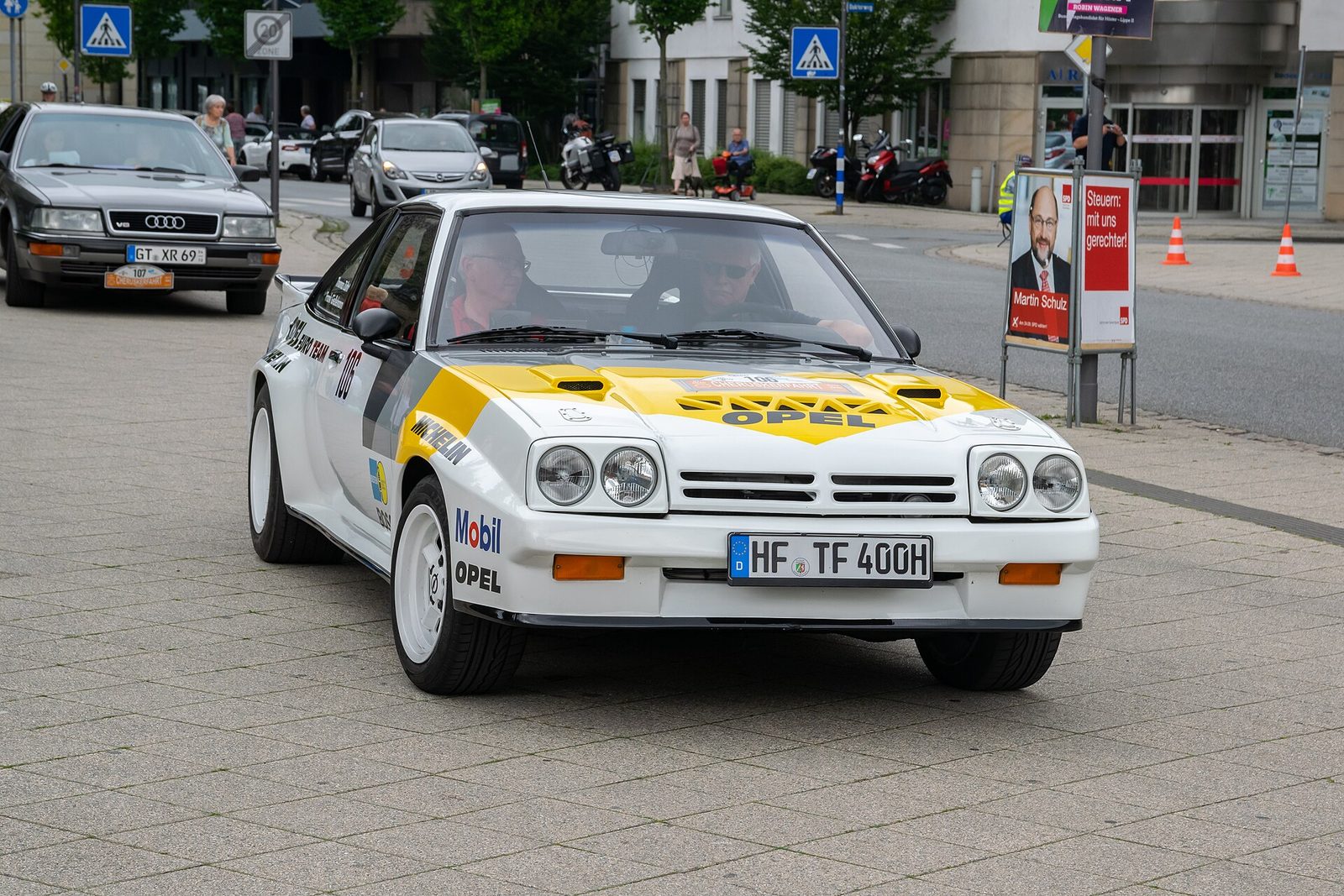
The Manta 400
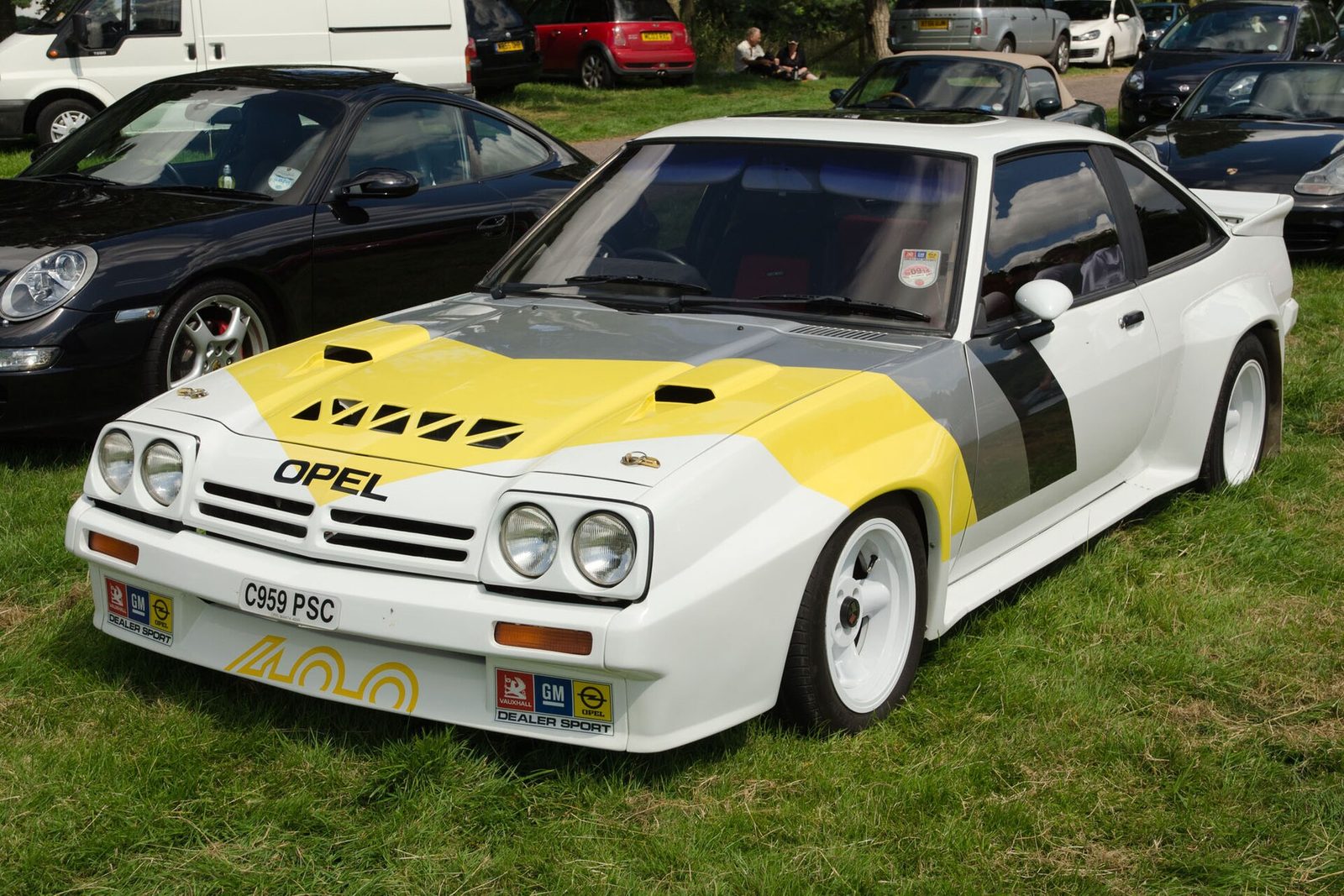
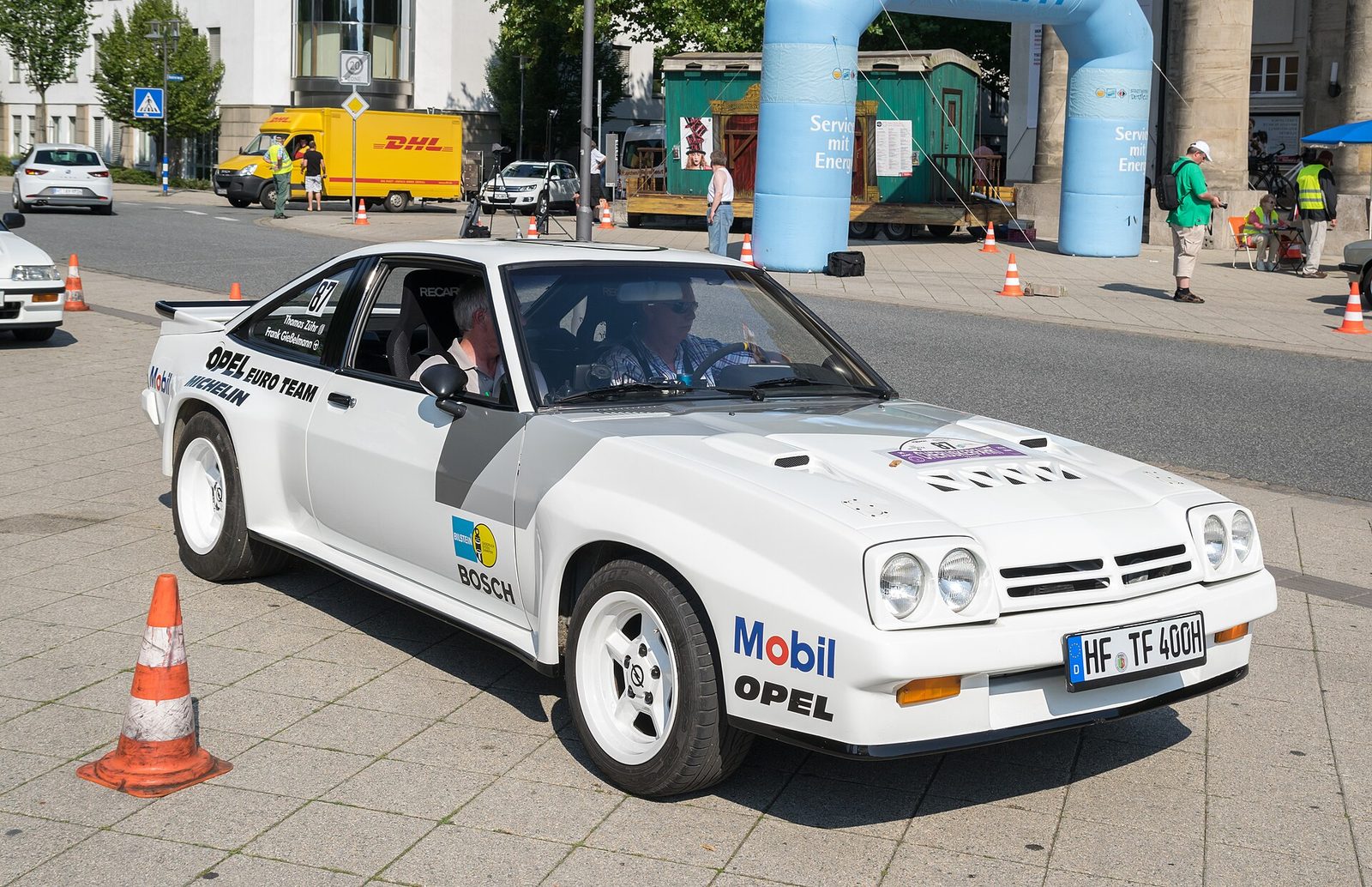
For Group B, Opel developed the Manta 400 together with tuner Irmscher and Britain’s Cosworth. Cosworth supplied a 16-valve cylinder head for the existing engine block, while Irmscher handled, among other things, the exterior with its distinctive spoilers. 245 were built.
In the World Championship the Manta 400 could show well on asphalt and on rough events, but not against Audi and Lancia. Jimmy McRae finished third on the 1983 RAC Rally; Rauno Aaltonen second on the 1984 Safari. The car’s greatest success came in national championships, notably in Britain (where Russell Brookes and Jimmy McRae drove it in those years), and in the European championship.
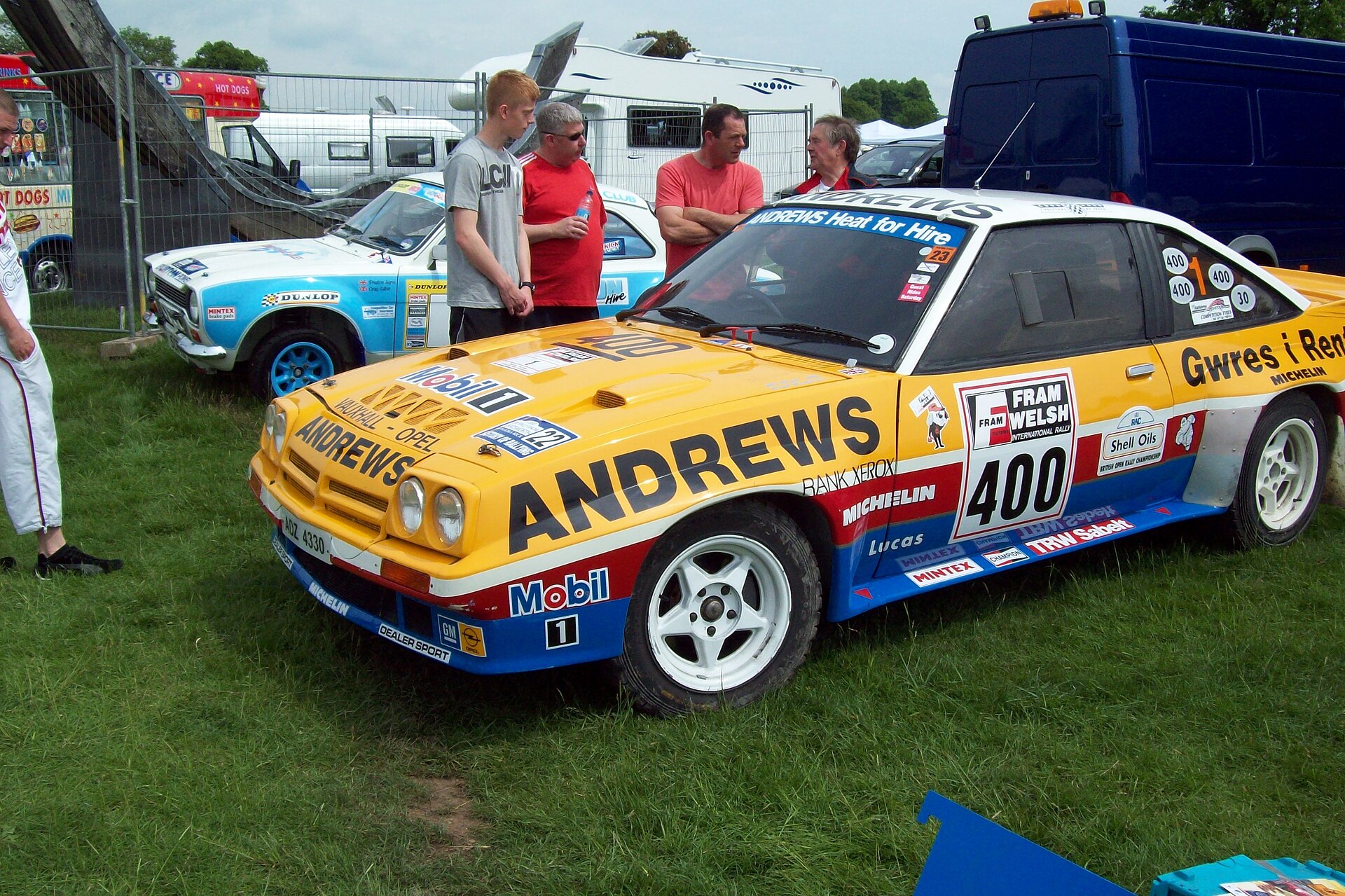
Röhrl’s 1982 title-winning car and its Group B successor: rear-wheel drive, a Cosworth cylinder head and most of its success in national championships.
Opel and Group B
Opel then abandoned the idea of a four-wheel-drive Group B car. After 1986 Opel switched to Group A with the Kadett GSi. See Opel for the team, which was led in the title year of 1982 by Tony Fall as director of the Opel Motorsport Team.
European and national championships
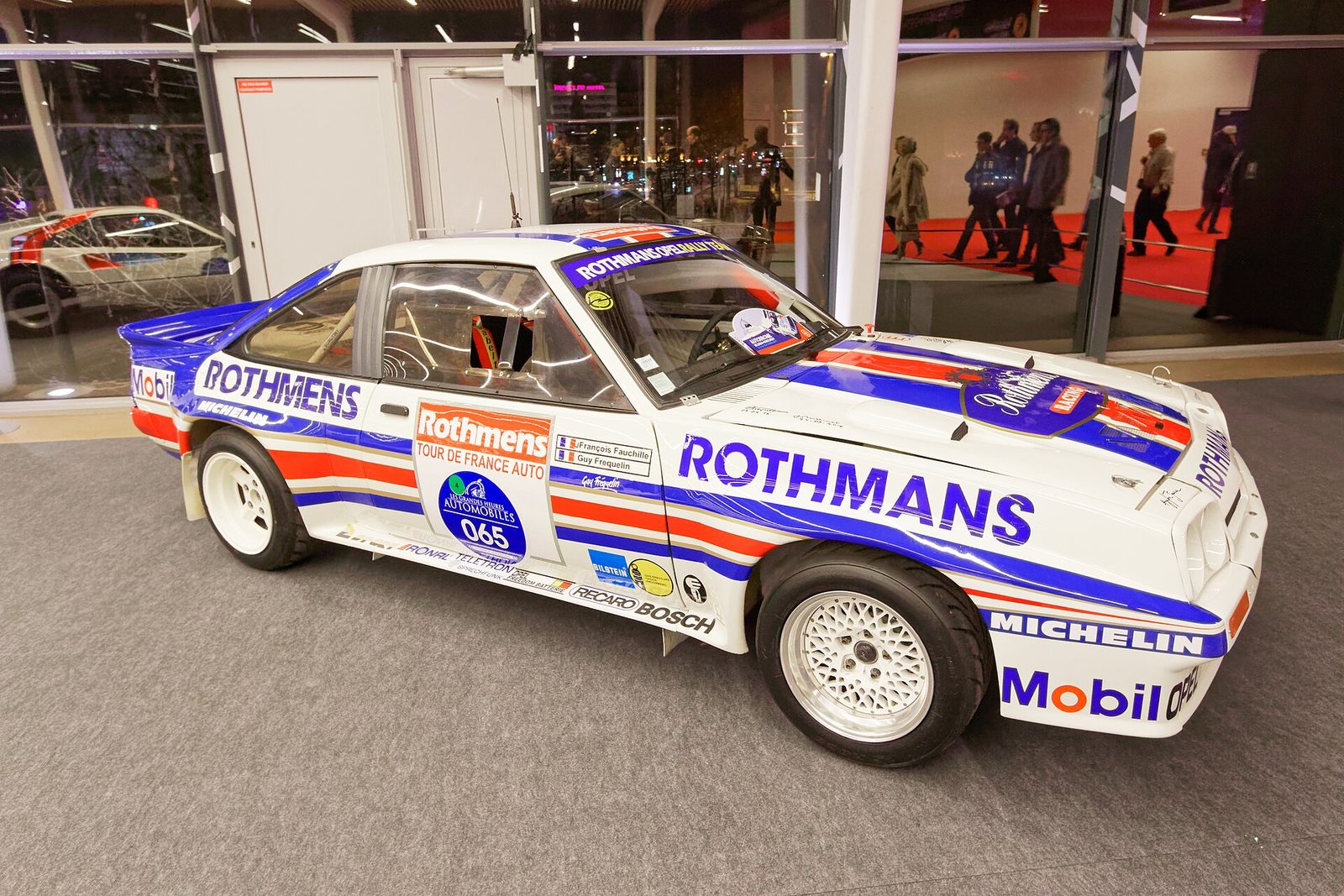
The Manta 400 won national titles across Europe: in Germany (Erwin Weber, 1983), France (Guy Fréquelin, 1983 and 1985), Britain (Jimmy McRae 1984, Russell Brookes 1985), Ireland (Billy Coleman 1984, Austin McHale 1985 and 1986) and the Netherlands (Jan van der Marel, 1984 and 1985). See European and national championships.
Results in the World Rally Championship
World Rally Championship podiums of the car (all evolutions), year by year (1982–1986). win 2nd 3rd
3 WRC wins · 13 podium finishes, 1982–1986
Photo gallery 4 photos
Historic Group B cars photographed at events, demonstrations and museums; each caption states where and when.
Further resources
- FIA homologation: Opel Manta 400 (form B-237) EN · archive
The FIA's homologation record with dates, extensions and the scanned form. - Opel: 50 years of Ascona B and Manta B EN · article
Opel's anniversary story covering the Ascona 400 and Manta 400 rally homologation specials. - Motoring Research: Opel Manta 400, the forgotten Group B road car EN · article
The Manta 400 homologation special and its rally record.
More from Cars
Sources
- Wikipedia (EN), Opel Manta (Manta 400) — https://en.wikipedia.org/wiki/Opel_Manta
- Wikipedia (EN), 1982 World Rally Championship — https://en.wikipedia.org/wiki/1982_World_Rally_Championship
- Wikipedia (EN), Walter Röhrl — https://en.wikipedia.org/wiki/Walter_R%C3%B6hrl
- Wikipedia (EN), Group B (team managers) — https://en.wikipedia.org/wiki/Group_B
All text is original writing for Grouve Sports Management Group, based on the sources above. Facts checked on 21 October 2026.
Follow Grouve Sport on YouTube — rally Shorts now, Group B documentaries soon.
SubscribeThumbnail photos on this page: Brian Snelson from Hockley, Essex, England (Wikimedia Commons, CC BY 2.0); HombreDHojalata (Wikimedia Commons, CC BY-SA 3.0); 先従隗始 (Wikimedia Commons, CC0); Alf van Beem (Wikimedia Commons, Public domain); SG2012 (Wikimedia Commons, CC BY 2.0); MrWalkr (Wikimedia Commons, CC BY-SA 4.0).