
Ford RS200
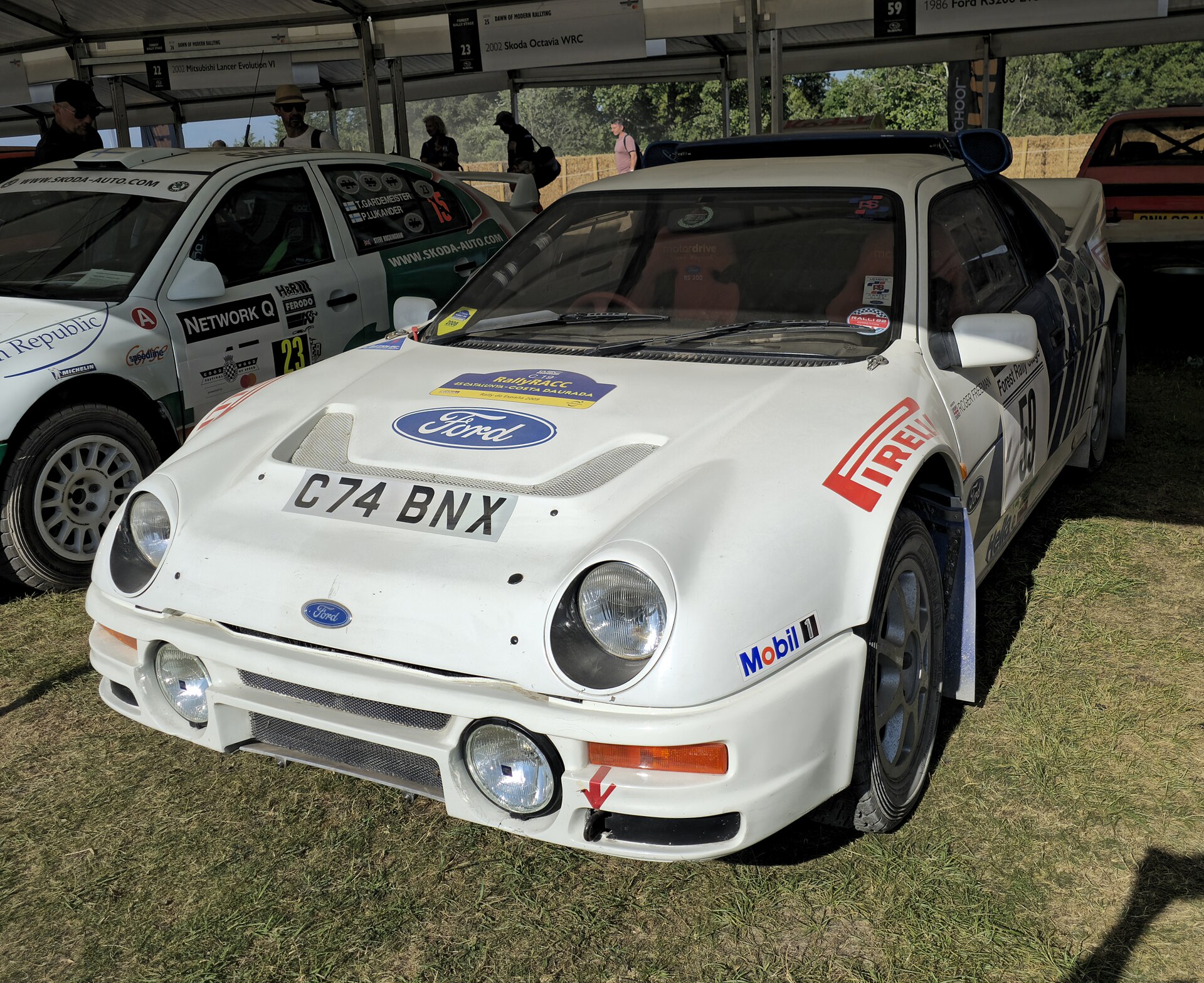
Ford first built its Group B plans around the rear-wheel-drive Escort RS1700T. Once it became clear that the car stood no chance against four-wheel-drive opposition, Ford Motorsport started again — with a car unlike anything else.
Ford RS200 — indicative
Episode 5 — The British Challengers: MG Metro 6R4 & Ford RS200
Ford’s Group B car and the turning point of 1986.
Design
The chassis was designed by former Formula 1 designer Tony Southgate; Ford engineer John Wheeler, who also had F1 experience, worked on its development. The layout was unusual: the engine sat in the middle, but the gearbox was at the front, giving a more even weight distribution. The composite body was styled by Ghia, and the 200 road cars were built by Reliant. The programme was run by Ford Motorsport at Boreham, with Stuart Turner as director of motorsport and Peter Ashcroft as competitions manager. See Ford Motorsport.
1986: a single season
The RS200 made its world championship debut in Sweden in 1986, where Kalle Grundel and Terry Harryman finished third straight away. Stig Blomqvist drove the second works car. Against the 205 T16 E2 and the Delta S4, however, the RS200 proved too heavy and short of power.
In Portugal, local driver Joaquim Santos lost control of his RS200 on the first stage while trying to avoid spectators in the road; three people were killed. Later that spring, former F1 driver Marc Surer crashed an RS200 into a tree on the Hessen Rally in Germany; his co-driver Michel Wyder was killed. After FISA’s decision, Ford withdrew the RS200 from the World Championship.
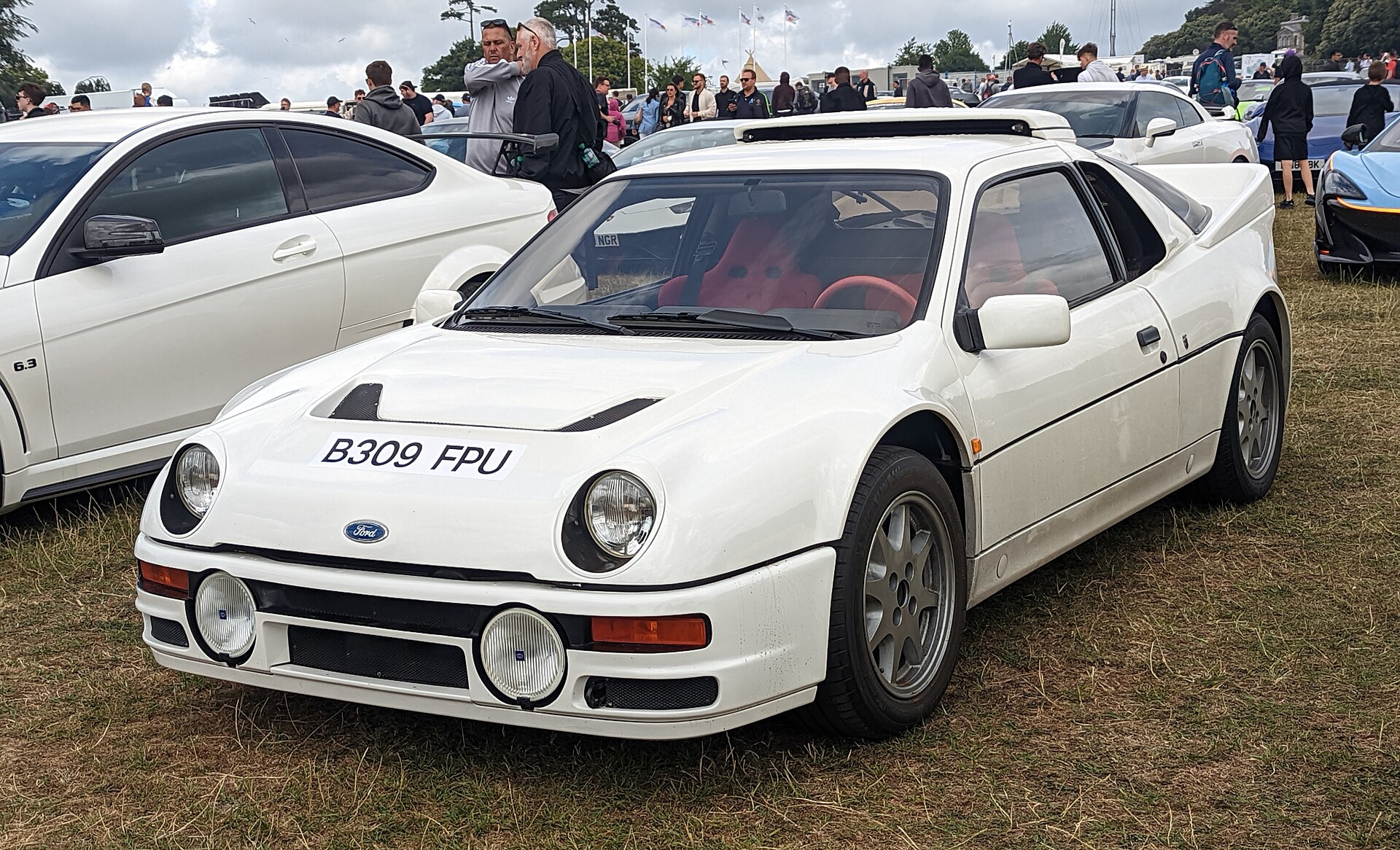
An all-new car with no production sibling, a Tony Southgate chassis and a turbocharged Cosworth engine. The RS200 programme arrived too late — and was overshadowed by the tragedy in Portugal.
Evolution
For 1987 Ford had prepared an Evolution with a 2,137 cc BDT-E engine; the ban meant it never reached the World Championship.
European and national championships
In its only full Group B season the RS200 won three national championships: Britain (Mark Lovell), Belgium (Robert Droogmans, who also won four European rounds) and the Netherlands (Stig Andervang). On the 1986 Hessen Rallye Marc Surer crashed his RS200 and his co-driver Michel Wyder was killed. See European and national championships.
Results in the World Rally Championship
World Rally Championship podiums of the car (all evolutions), year by year (1982–1986). win 2nd 3rd
0 WRC wins · 1 podium finishes, 1982–1986
Photo gallery 4 photos
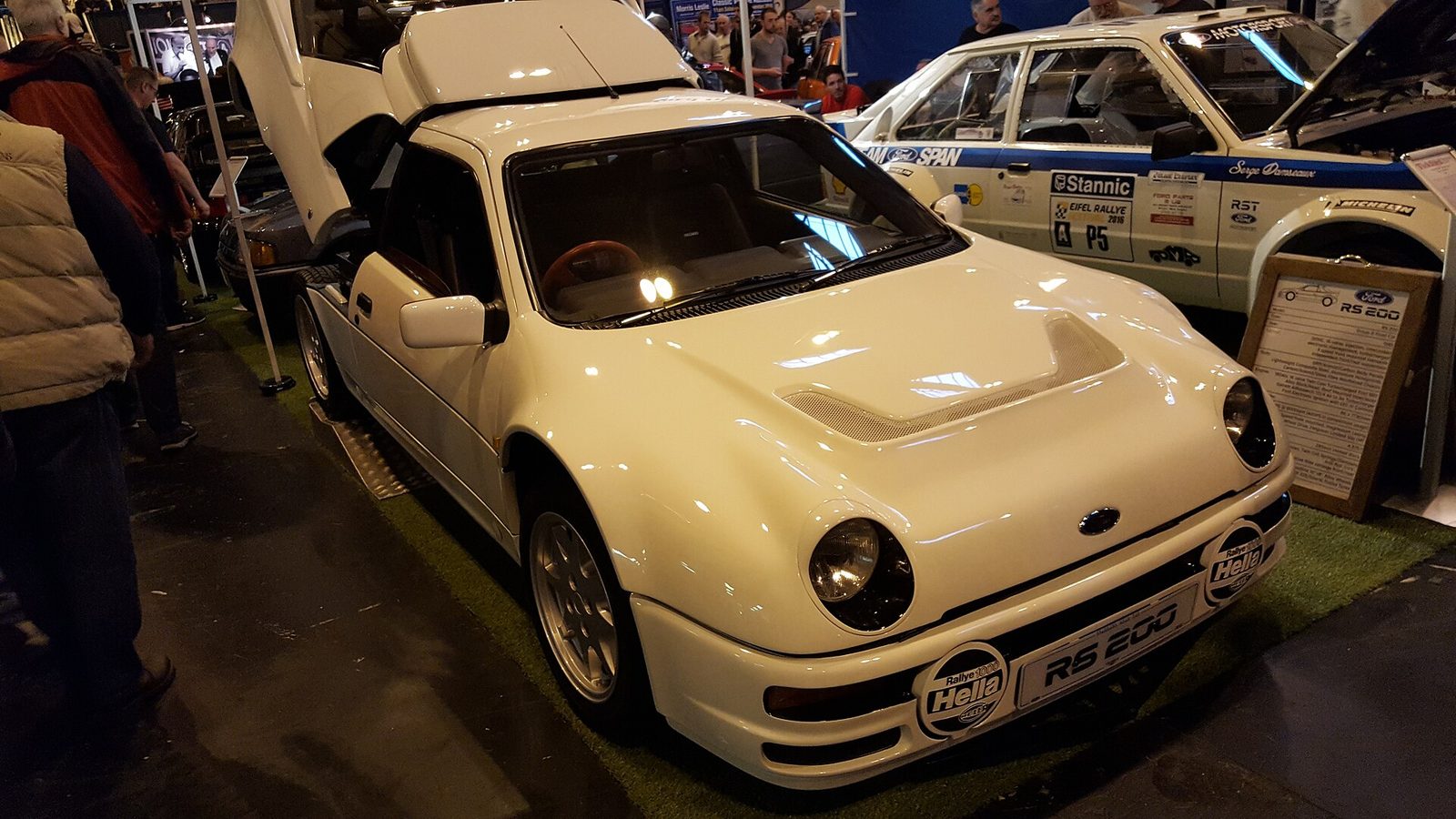
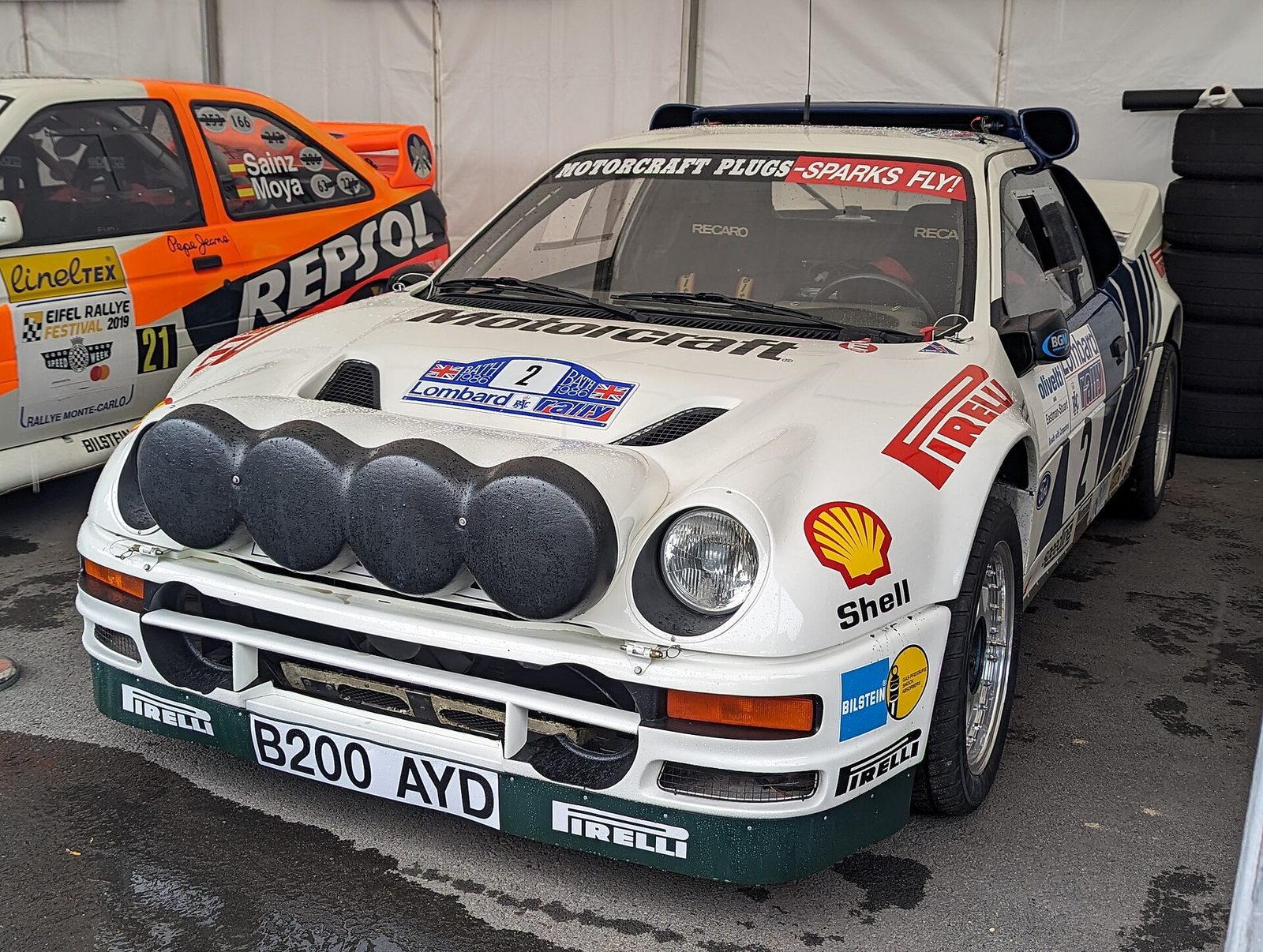
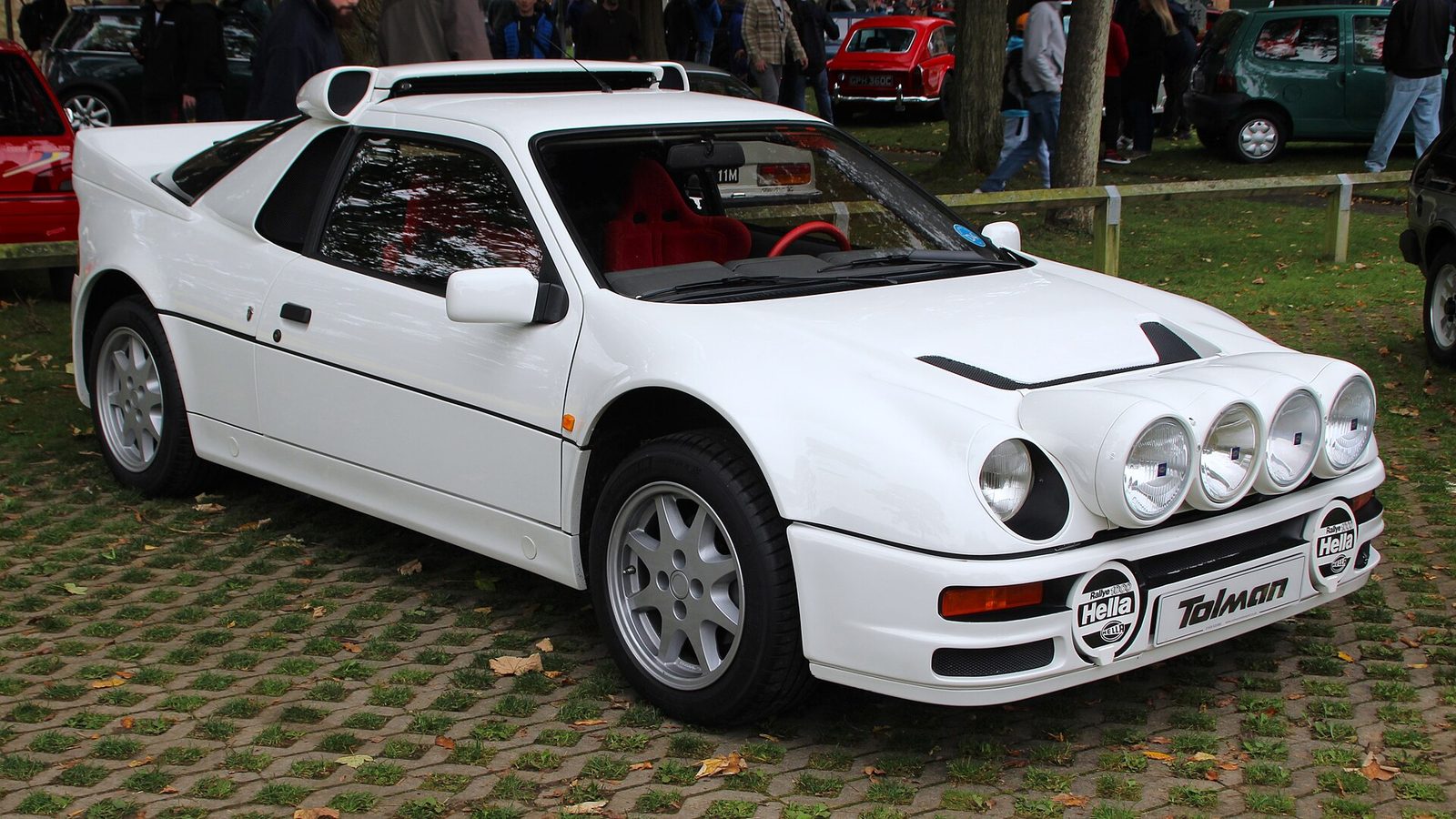
Historic Group B cars photographed at events, demonstrations and museums; each caption states where and when.
Further resources
- FIA homologation: Ford RS200 (form B-280) EN · archive
The FIA's homologation record with dates, extensions and the scanned form. - Ford RS Owners Club: RS200 EN · community
The club's RS200 model page and register. - Road & Track: Ford's RS200 is built on the GT40's legacy EN · article
The thinking behind Ford's purpose-built Group B car. - Road & Track: the RS200's unusual drivetrain EN · article
Technical explainer of the RS200's front-mounted gearbox layout. - RS200 — Ford's Group B Rally Legend — Graham Robson (Herridge & Sons, 2021) EN · book
Full history of the Ford RS200 project. ISBN 9781906133955.
More from Cars
Sources
- Wikipedia (EN), Ford RS200 — https://en.wikipedia.org/wiki/Ford_RS200
- Wikipedia (EN), Group B — 1986 — https://en.wikipedia.org/wiki/Group_B
- Wikipedia (EN), 1986 World Rally Championship — https://en.wikipedia.org/wiki/1986_World_Rally_Championship
All text is original writing for Grouve Sports Management Group, based on the sources above. Facts checked on 21 October 2026.
Follow Grouve Sport on YouTube — rally Shorts now, Group B documentaries soon.
SubscribeThumbnail photos on this page: SG2012 (Wikimedia Commons, CC BY 2.0); Alf van Beem (Wikimedia Commons, Public domain); SG2012 (Wikimedia Commons, CC BY 2.0); _morgado (Wikimedia Commons, CC BY 2.0); Calreyn88 (Wikimedia Commons, CC BY-SA 4.0); Miloslav Rejha (Wikimedia Commons, CC BY 4.0).